Subset options
Start with the defaults in Create a subset. Change one option at a time and compare the output in the application that uses it.
| Option | Default | When to change it |
|---|---|---|
| Glyph numbering | GlyphIdPolicy::Preserve |
Try Compact when you need smaller output and the font supports it |
| Hinting | HintingPolicy::Keep |
Try Drop if smaller output matters more than preserving small-size rendering |
| Text layout | LayoutPolicy::Preserve |
Remove data only for controlled content that does not need it |
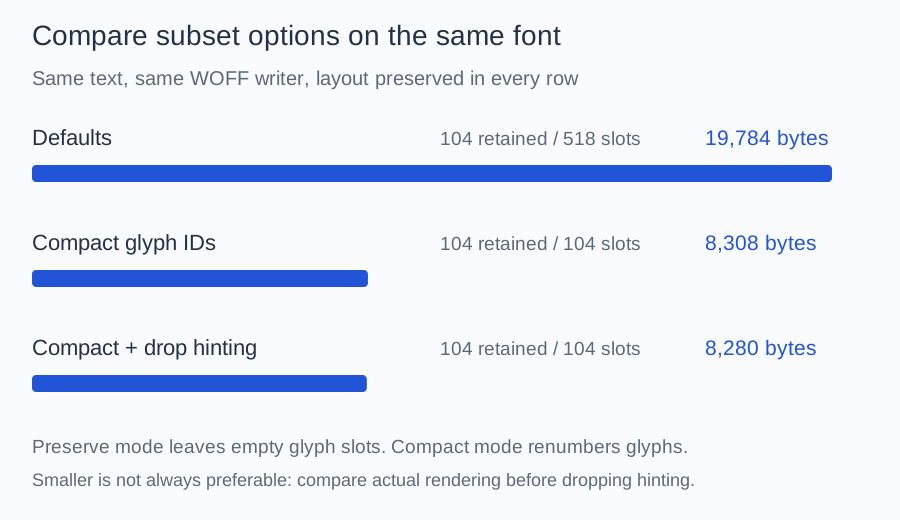
All three examples retain 104 glyphs and preserve layout. Default output is 19,784 bytes with 518 slots; compact output is 8,308 bytes with 104 slots. Dropping hinting reduces this sample to 8,280 bytes. The small additional saving does not establish that removing hinting is appropriate for your renderer. The measurements use the bundled Inter fixture.
Compact glyph numbers
Run this as a separate script beside vendor, with a source font and an
existing output directory. The destination must be new.
<?php

require __DIR__.'/vendor/autoload.php';

use Alto\Font\Font;
use Alto\Font\Subset\GlyphIdPolicy;
use Alto\Font\Subset\SubsetOptions;
use Alto\Font\Subset\UnicodeSet;
use Alto\Font\Writer\WoffWriter;

$font = Font::fromFile(__DIR__.'/fonts/Inter-Regular.ttf');
$characters = UnicodeSet::fromText('ALTO Font 0123456789');
$result = $font->subset(new SubsetOptions(
    $characters,
    glyphIds: GlyphIdPolicy::Compact,
));

$destination = __DIR__.'/output/inter-compact.woff';
new WoffWriter()->write($result->font, $destination);

printf("Saved inter-compact.woff (%d bytes)\n", filesize($destination));
Compact mode closes gaps in glyph numbering and rewrites the related data. Compare its file size with a default subset written in the same format. It can reject fonts containing structures that cannot be safely rewritten; see the support reference.
Keep the default if another part of your application stores original glyph identifiers. Compact mode also removes glyph names. Even with matching outlines and positioning, rendering can change on some platforms; compare small text as well as large text before shipping.
Remove hinting
To test this option, replace the SubsetOptions call in your script with:
<?php

use Alto\Font\Subset\HintingPolicy;

$result = $font->subset(new SubsetOptions(
    $characters,
    hinting: HintingPolicy::Drop,
));
Hinting helps render glyphs at small sizes. Removing it can reduce the file, but may change sharpness or spacing on the target renderer. Keep it unless you have checked the sizes and devices your application uses.
Remove text layout data
Keep LayoutPolicy::Preserve for ordinary text. Layout data controls behavior
such as ligatures, joining, and mark placement.
LayoutPolicy::SubstitutionsOnly keeps supported substitutions but removes
OpenType positioning. LayoutPolicy::Drop removes both. These options can
break prose or scripts that depend on shaping; reserve them for controlled
content such as isolated symbols. Legacy kerning is retained independently,
so Drop does not mean every kerning adjustment is removed.
Subset a variable font
Subset the original variable font. Supported axes remain available in the output. Exporting a fixed weight or restricting axis ranges is unsupported.
If you obtained a selected view from withVariations() or a weighted finder
query, call withoutVariations() before subsetting. This returns to the full
variable source; it does not keep only the selected weight.
Always review SubsetResult::$warnings. For precise table and offset limits,
see OpenType subsetting support.
Check output size and rendering
Required compound glyphs and substitution dependencies may remain even when
they were not requested. Preserve mode also keeps original glyph slots. Compare
actual files in the same format before changing policies: sfntSize measures
uncompressed font data, while filesize() measures the written container.
font->face()->glyphCount includes empty preserved slots; retainedGlyphCount
counts retained glyphs.
For a visible difference, start with default options, retain hinting and layout, and compare your application's text at its actual display sizes. Include all required accents and characters. Matching outlines and positioning do not guarantee matching pixels on every renderer. Recursive has a documented CoreText dependency on glyph names and additional glyphs; its technical diagnosis and narrow workaround do not establish rendering fidelity for other fonts.